
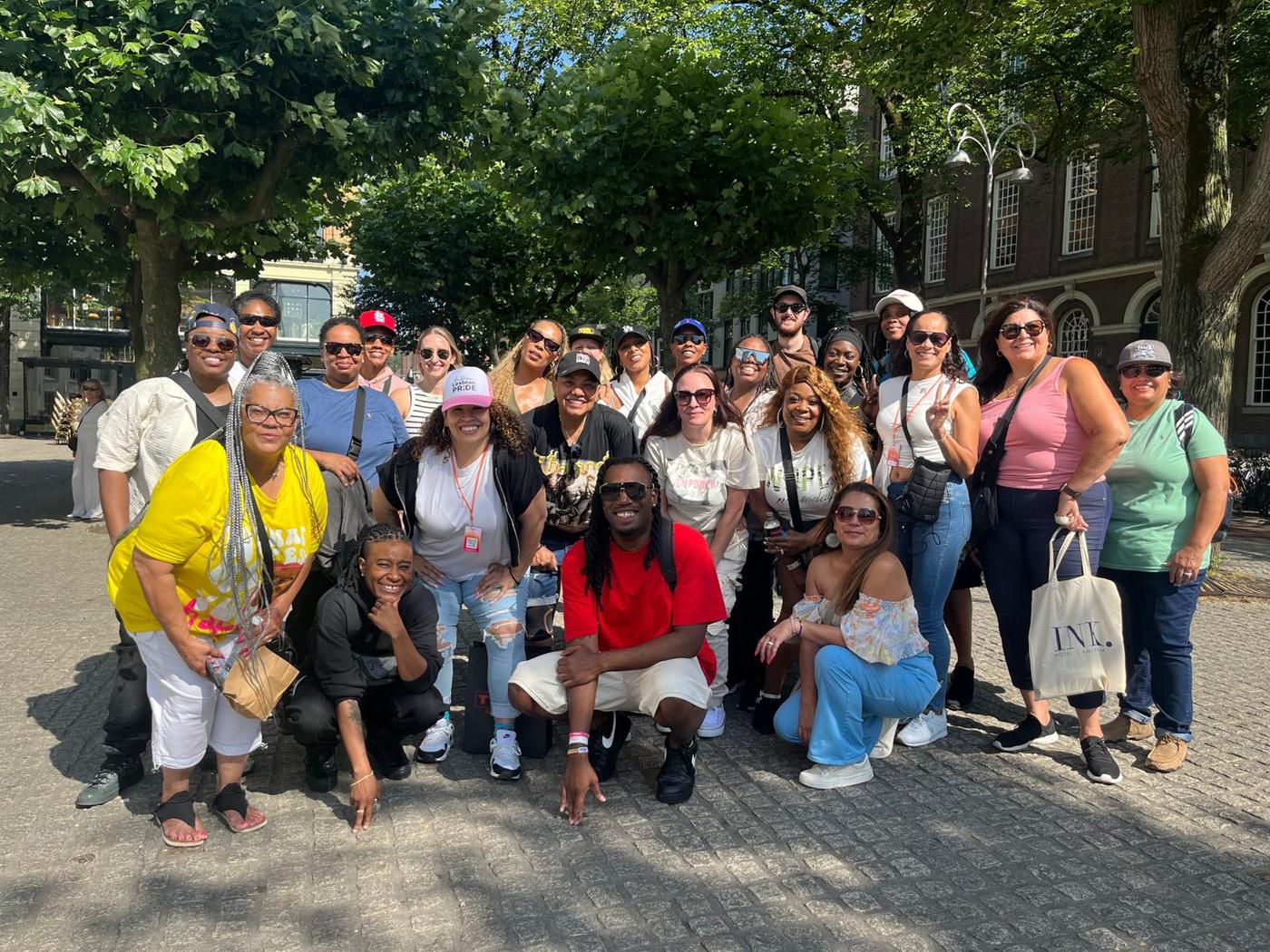
Most visitors pass through Dam Square within an hour of arriving in Amsterdam. Few realise they are standing on the spot that gave the city its name. The Dam is where Amsterdam began, where it governed itself at the height of its power, and where the Netherlands still gathers to remember its war dead.
Our Golden Age City Center tour starts here for exactly that reason.
The dam in the Amstel
In the thirteenth century, people living at the mouth of the river Amstel built a dam across it to control the water. The settlement took its name from it: Amstelredamme. The oldest surviving document to mention the town, a toll charter from 1275, is kept by the Amsterdam City Archives. Our Amsterdam history guide covers what came next.
The dam soon became more than a flood barrier. Boats unloaded on the river side, and the open space on top became the town's market and meeting place. The Damrak and Rokin — today busy streets — were once open water on either side of it.
The town hall that became a palace
By the seventeenth century, Amsterdam's medieval town hall on the Dam was too small for one of the richest cities in Europe. The city commissioned architect Jacob van Campen to design a new one. Construction began in 1648 — the year the Peace of Münster confirmed Dutch independence from Spain — and the building was inaugurated in 1655. The old town hall burned down in 1652, while the new one was still being built.
The new town hall was a statement. Its classical facade, sculpture by Artus Quellinus, and the vast marble Citizens' Hall with maps of the world set into the floor presented Amsterdam as the centre of the known world. The palace itself notes that the building stands on 13,659 wooden piles, driven through the soft ground into a firm sand layer. Our article on Amsterdam canal ring history explains why the city is built this way.
In 1806 Napoleon made his brother Louis Napoleon King of Holland. In 1808 Louis moved into the town hall and turned it into a royal palace. The same year, the old weigh house that stood on the square was demolished, opening up the Dam to roughly the shape it has today.
The Royal Palace is still used by the Dutch royal house for state visits and official receptions. When it is not in use, it is open to the public, and it is one of the best Golden Age interiors you can visit. See our guide to the Dutch Golden Age in Amsterdam.
The Nieuwe Kerk
Beside the palace stands the Nieuwe Kerk (New Church). "New" is relative: it dates from the fifteenth century and was rebuilt after fires. Since the nineteenth century, Dutch monarchs have been inaugurated here — most recently King Willem-Alexander in 2013. Today it is used mainly for exhibitions and events.
The National Monument
On the east side of the square stands the National Monument, a white stone pillar unveiled in 1956 in memory of the victims of the Second World War. It was designed by architect J.J.P. Oud with sculpture by John Rädecker. Every year on 4 May, National Remembrance Day, the King lays a wreath here and the country observes two minutes of silence at 20:00.
Please treat the monument with respect: sitting on the steps is common, but climbing it, eating, or loud behaviour is not appropriate.
How to visit Dam Square
- Go early. Before 9:00 the square is calm and you can see the palace facade without crowds.
- Mind the trams. Several tram lines cross the square; the tracks are easy to miss.
- Look for the details. The palace facade carries sculpture about the sea and trade, and a ship-shaped weather vane on top.
- Walk out of the square. The quietest parts of the historic centre are a few minutes away: the Begijnhof to the south, and the canal ring to the west.
Our Amsterdam walking tours guide suggests routes that start here.
Frequently asked questions
Why is it called Dam Square?
It stands on the site of the dam built across the Amstel in the thirteenth century, which also gave Amsterdam its name.
Can you go inside the Royal Palace?
Yes, when it is not being used for royal or state events. Check opening days on the palace website before you go.
Does the Dutch king live in the Royal Palace Amsterdam?
No. The palace is used for official occasions. The royal family lives in The Hague.