
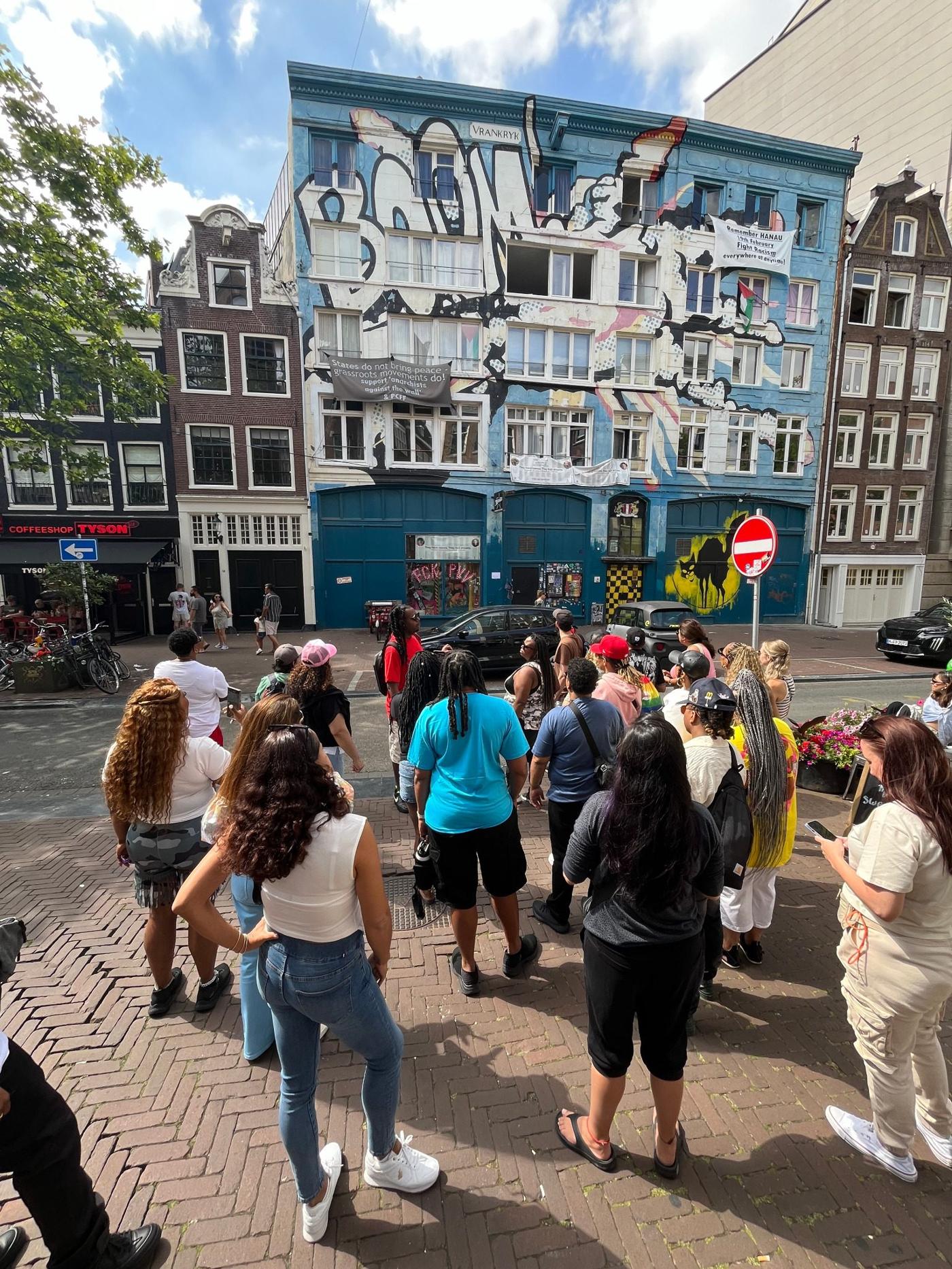
Amsterdam weed history is a strange and wonderful story. It is a story about hippies, police officers, worried parents, clever lawyers and a few very stubborn shop owners. It is also a story about a country that looked at a problem and said, "Let's be practical about this."
Here is the funny part. Weed is not actually legal in the Netherlands. It never has been. And yet Amsterdam is the most famous weed city on the planet. People fly in from Ohio and Manchester just to sit in a smoky room on a canal and order a pre-roll with their mint tea.
How did that happen? We tell this story almost every day on our private Amsterdam tours and group walks. We have been doing it since 2012. Our founder, Erik, moved here from Philadelphia, and he still remembers being amazed that the law here worked so differently from home. This is the short, simple version of how Amsterdam became the world's weed capital.
Why is weed tolerated in Amsterdam?
Let us start with the big question. Why is weed tolerated in Amsterdam if it is not legal?
The answer is one Dutch word: gedoogbeleid. It means "tolerance policy." The idea is simple. Some things are against the law, but the government chooses not to chase them, as long as people follow certain rules.
The Dutch are famous for this kind of thinking. They are a trading nation. For centuries they made money by getting along with everyone. They also live below sea level, so they are used to working together to solve hard problems. If you have ever walked along the canals and wondered how a whole city stands on wooden posts in mud, you get the idea. Our story of the Amsterdam canal ring history shows how practical this city has always been.
So when cannabis showed up in a big way in the 1960s, the Dutch did not just ask, "Is this bad?" They asked, "What causes the least harm?"
The 1960s: hippies, Provos and the first joints in public
In the 1960s, young people all over the world were rebelling. In the US it was Woodstock and protests. In the UK it was the Beatles and the Rolling Stones. In Amsterdam, it was a group called the Provos.
The Provos were young activists who loved pranks and street theater. They wanted free bikes for everyone, cleaner air and more freedom. They also made cannabis part of their public image. Hippies from across Europe and America started traveling to Amsterdam. The city became a stop on the "hippie trail."
By the late 1960s, young people were smoking hash in public places and at concerts. Police arrests went up. But many Dutch people began to ask an honest question. Are we really going to put thousands of young people in jail for smoking a little hash?

Youth centers and the "house dealer"
Here is a part of Amsterdam weed history many people do not know. In the late 1960s and early 1970s, youth centers in Amsterdam were popular places for teens and young adults. Some of these centers had a "house dealer." That was one trusted person who sold small amounts of hash inside the building.
Why would a youth center allow that? Because the alternative looked worse. Street dealers might sell harder drugs too. A house dealer only sold hash, and only in small amounts. It kept young people away from heroin and other dangerous drugs.
This idea became the seed of everything that followed. Separate the soft drugs from the hard drugs. Keep the cannabis market small, calm and in the open. That way, a teenager buying hash does not end up talking to someone selling heroin.
1972: Mellow Yellow and the first coffeeshop
In 1972, a small place called Mellow Yellow opened in Amsterdam. It is often called the first coffeeshop. It was a simple spot where you could buy and smoke hash in peace.
Remember, this was still technically illegal. But police mostly looked the other way. As long as the shop stayed small, quiet and did not sell hard drugs, nobody shut it down.
Then in 1975, The Bulldog opened in the Red Light District. It became one of the most famous coffeeshop names in the world. Over the next years, more and more coffeeshops opened all over the city. Some long-running names you may hear today, like Barney's, Grey Area, Dampkring and Boerejongens, became well known later as the scene grew.
The word "coffeeshop" stuck. In Amsterdam today, a coffeeshop sells cannabis. A café or a koffiehuis (coffee house) sells coffee. Do not mix them up, or you will have a very different morning than you planned.
1976: the law that changed everything
In 1976, the Dutch government changed the Opium Act. That is the main Dutch drug law. The big change was this: the law now split drugs into two groups.
- Hard drugs like heroin and cocaine. These are seen as a serious risk to health.
- Soft drugs like cannabis and hash. These are seen as a much smaller risk.
Having or selling small amounts of soft drugs became a low police priority. That was the start of the official tolerance policy. Cannabis was still illegal on paper. But the government said it would not chase small users and small sellers.
This was a huge deal. In the US at that time, the "War on Drugs" was getting tougher. In the UK, cannabis possession could still get you a criminal record. The Netherlands chose a very different road.
Why did the Dutch split soft and hard drugs?
Health experts and government committees looked closely at drug use. They saw that most people who tried cannabis did not move on to harder drugs. They believed that putting young people in prison did more harm than the weed itself.
They also saw a big danger. If soft and hard drugs were sold by the same dealers, a young person could easily be pushed toward heroin. Splitting the markets was a way to protect people.
The 1980s: heroin, the Zeedijk and tough lessons
The 1970s and 1980s were hard years for Amsterdam. Heroin hit the city badly. The Zeedijk, a street near Centraal Station and the Red Light District, became famous for drug dealing and crime. Locals were scared to walk there at night.
This crisis made the soft-drug policy look even more important. The city wanted cannabis users far away from the heroin scene. Coffeeshops gave them a calm, separate place.
Today the Zeedijk is a lively street with Chinese restaurants, old bars and a Buddhist temple. You can walk it at night and smell roast duck and frying oil. It is a great example of how much the city has changed. We pass through this area on our Cannabis Culture & Coffeeshop Etiquette tour and tell the story right where it happened.
The 1990s: the rules get written down
By the 1990s, there were a lot of coffeeshops in the Netherlands. Some caused problems. So the government wrote down clear rules that all coffeeshops had to follow. They are often summed up with the Dutch letters AHOJG. Here is what they mean in plain English:
- A – No advertising. Coffeeshops cannot promote cannabis. That is why you see plain signs and not big billboards.
- H – No hard drugs. Only soft drugs like weed and hash.
- O – No nuisance. No noise, no trouble, no mess for the neighbors.
- J – No sales to young people. Nobody under 18. Shops check ID.
- G – No large sales. Only small amounts per person.
Today, the limit is 5 grams per person per day. A shop can hold at most 500 grams of stock at one time. These rules are why your coffeeshop visit feels so orderly. It is not a free-for-all. It is a tightly managed system.
The back door problem
Here is the weird contradiction at the heart of Amsterdam weed history. Coffeeshops can sell cannabis out the front door. But where does the cannabis come from?
The answer is the "back door." Growing and buying cannabis in large amounts is still illegal. So a shop can legally sell you a gram, but it cannot legally buy the kilos it needs to stay open. The Dutch have argued about this for about fifty years.
It is a bit like a bakery that is allowed to sell bread but not allowed to buy flour. It makes no sense. But it is how things work at the time of writing.
The weed experiment
To fix this, the Netherlands started a test called the wietexperiment, which means "weed experiment." In about ten Dutch towns, including Breda, Tilburg, Groningen, Maastricht, Arnhem, Nijmegen, Almere and Zaanstad, coffeeshops buy cannabis from legal, licensed growers. The goal is to see if a legal supply chain works better.
Amsterdam is not part of this experiment. So in Amsterdam, the back door is still a gray area. If you want to see one of the experiment towns, Zaandam is part of Zaanstad and only a short train ride away. Our post on weed and vapes in Zaandam and Haarlem coffeeshops has more.
The 2000s and 2010s: tighter rules and smoke-free cafés
The new century brought more changes. Here are the big ones.
- 2008: the tobacco ban. The Netherlands banned smoking tobacco inside bars, cafés and restaurants. This includes coffeeshops. Many Europeans mix weed with tobacco in joints. So shops started selling pure joints, or let people use vaporizers. If you are American, you will be glad. Ask for "pure" with no tobacco.
- Fewer shops. Over the years, many coffeeshops closed. Some cities limited new licenses. Rules about distance from schools also closed some shops.
- The weed pass. Around 2012, the government tried to limit coffeeshops to Dutch residents only. Amsterdam pushed back hard. The city depends on tourism, and it did not want street dealing to come back. In the end, Amsterdam coffeeshops stayed open to visitors.
Erik remembers this time well. "We started Oranje Umbrella in 2012, right in the middle of the weed pass debate," he says. "Every guest asked if they could still go into a coffeeshop. I spent half of every tour explaining Dutch politics. I still do."
Today: Amsterdam weed rules for visitors
Fast forward to today. Amsterdam is still the world's weed capital. But the city is trying to balance tourism with the needs of the people who live here.
Here is what has changed recently:
- May 2023: street smoking ban in the Red Light District. Smoking cannabis on the street in De Wallen (the Red Light District) is now banned. You can get a fine. Many other public places restrict it too.
- The "Stay Away" campaign. In 2023, Amsterdam ran an online ad campaign aimed at young British men planning wild stag trips. The message was clear: if you are coming only to get wasted and cause trouble, please stay away. The city still welcomes visitors. It just wants respectful ones.
- Talk of more changes. Politicians keep debating new rules for coffeeshops and tourists. Rules can change, so check the latest before you travel.
Our full guide, Is Weed Legal in Amsterdam? Rules for American and British Tourists, covers all of this. You can also read about where you can and cannot light up in our post on smoking weed in Amsterdam's streets.
One more thing that has never changed: you cannot take cannabis home. Exporting it from the Netherlands is a crime. In the UK, cannabis is a Class B drug. In the US, federal law and US Customs apply even if your home state is legal. Never fly with weed, vapes or edibles.

Walk through Amsterdam weed history with us
You can read about the history of coffeeshops in Amsterdam. Or you can stand on the street where it happened, smell the old canal water and hear it from someone who has lived it.
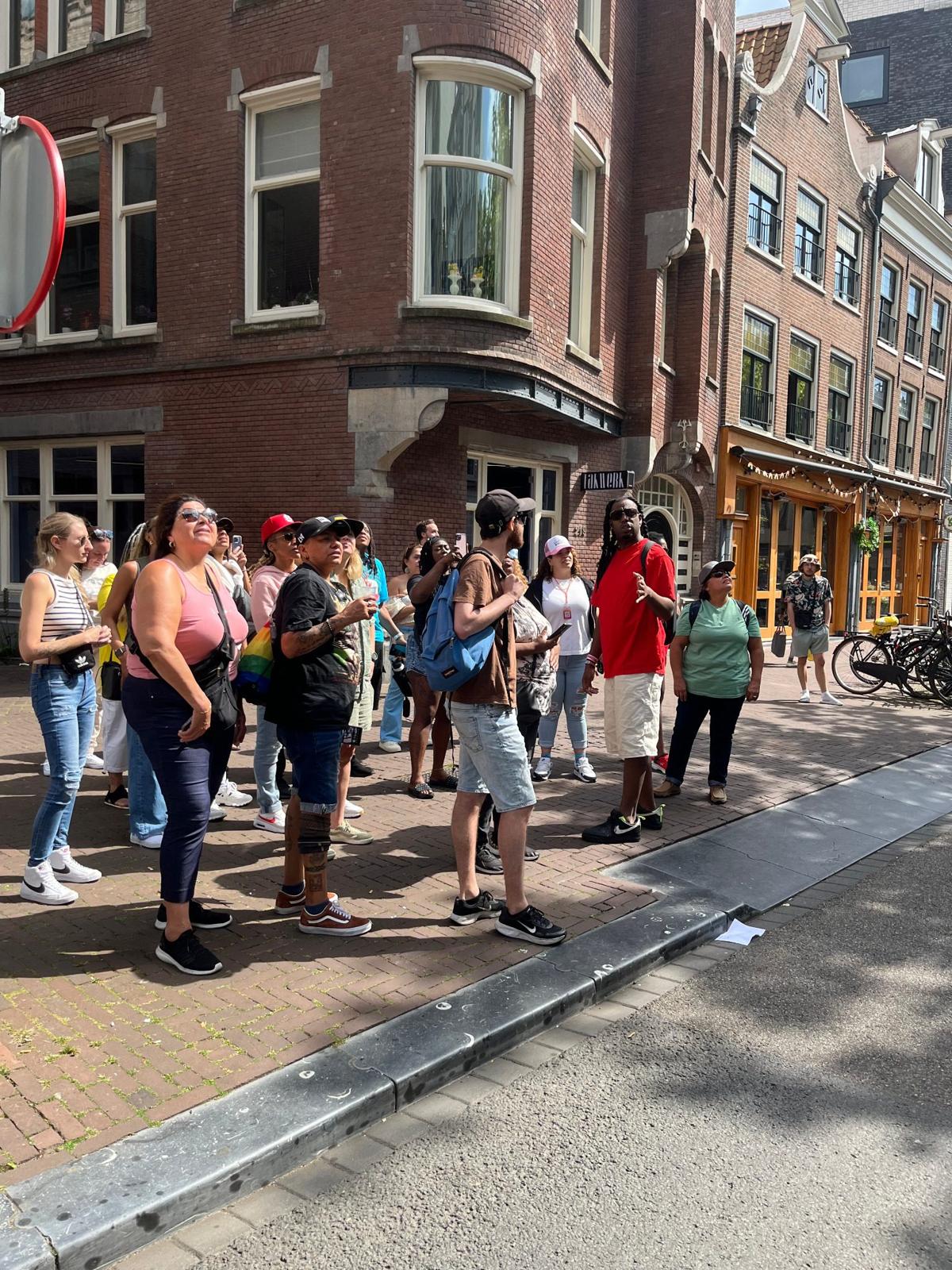
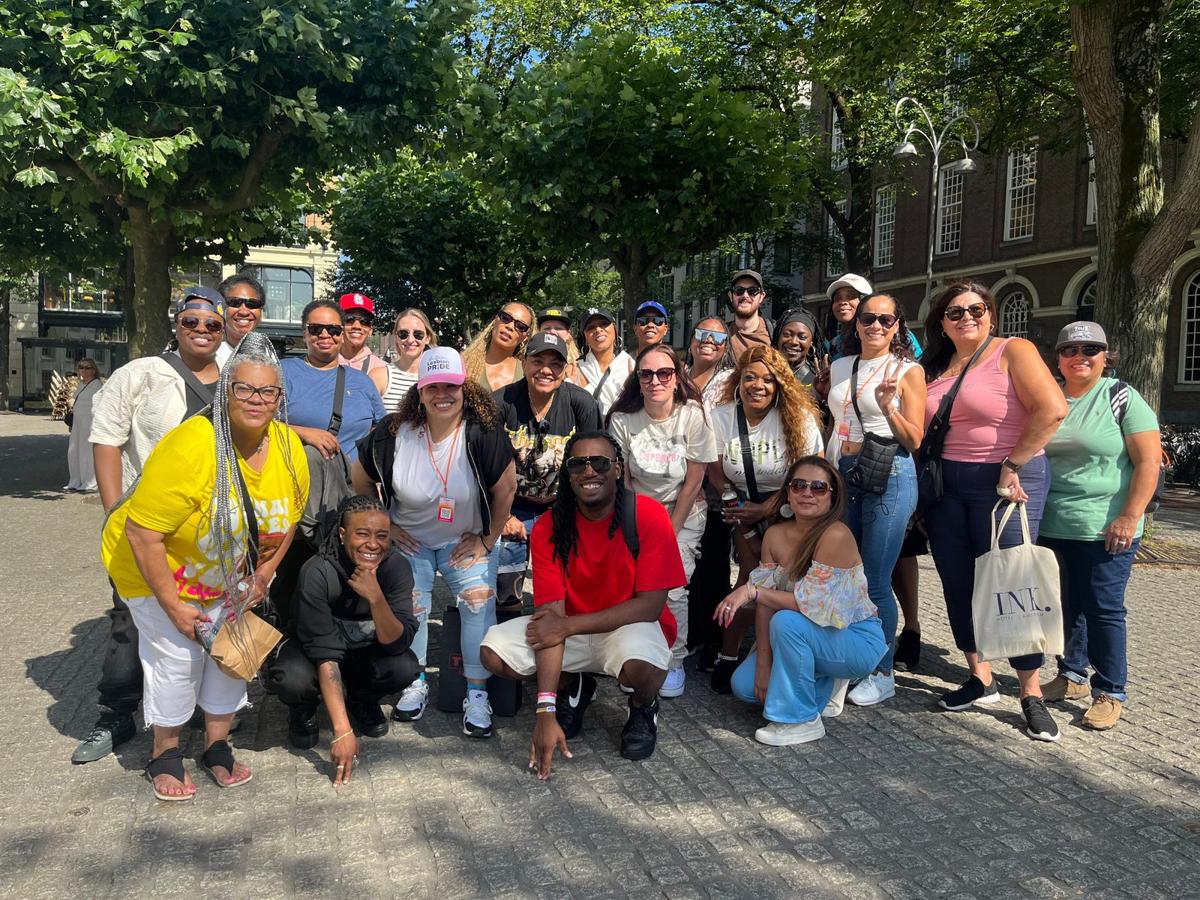
Our Cannabis Culture & Coffeeshop Etiquette tour lasts 2.5 hours. It starts at Beursplein, in front of the Beurs van Berlage on the Damrak, five minutes from Centraal Station. We walk through the Nieuwmarkt area and the edges of the Red Light District. We visit two to three licensed coffeeshops along the way.
The tour is strictly 18+, and we check photo ID. We do not sell, supply or arrange cannabis. Products are not included. Nobody has to consume anything. Many guests come only for the history. We ask everyone who does consume to eat first, stay hydrated and not mix with alcohol.
Any of our tours can be private — just your group, your date, your pace. Private tours start at €295 excl. VAT for the whole group. Group tours start at €27 per person. If you love history in general, pair it with our Golden Age City Center walking tour, which starts at Dam Square. For more on how a weed tour works, read Weed Tours in Amsterdam: The Complete Guide and the story of our original Amsterdam cannabis tour.
Quick answers
Why is weed tolerated in Amsterdam?
Weed is tolerated because of the Dutch gedoogbeleid, or tolerance policy. Since 1976, the law has treated soft drugs like cannabis as much less risky than hard drugs. Small sales in licensed coffeeshops are not prosecuted if shops follow strict rules.
What was the first coffeeshop in Amsterdam?
Mellow Yellow, which opened in 1972, is often called the first coffeeshop. The Bulldog followed in 1975 in the Red Light District. Both are big parts of Amsterdam weed history.
Is weed actually legal in Amsterdam?
No. Cannabis is still illegal on paper in the Netherlands. It is tolerated in small amounts, up to 5 grams per person per day, in licensed coffeeshops.
What is the back door problem?
Coffeeshops may sell cannabis to customers, but buying large amounts from growers is still illegal. This contradiction is called the back door problem. The wietexperiment is testing a legal supply in about ten Dutch towns, but not in Amsterdam.
Why did Amsterdam ban smoking weed in the Red Light District?
Since May 2023, smoking weed on the street in the Red Light District is banned. The city wanted to reduce noise, crowds and trouble for people who live there. You can get a fine if you break the rule.
Book your Amsterdam weed history tour with Oranje Umbrella
Amsterdam weed history is not just about getting high. It is about a city that chose a different path, and still argues about it every year. We have been telling that story for 14 years, to more than 4,000 reviewing guests, in English, Spanish, German and Dutch. Our tours have even been featured on Netflix.
Want it just for your group? Book a private tour on any date and time, from €295 excl. VAT for the whole group. Or see all our Amsterdam walking tours on the homepage.
Questions? Email Erik@oranjeumbrella.com or find us on Instagram at @oranjeumbrella.