What is the Amsterdam canal ring?
The canal ring is called the grachtengordel in Dutch. Gracht means canal. Gordel means belt. So it's the "canal belt," a half-ring of canals around the old city center.
It was mostly built in the 1600s, during the Dutch Golden Age. The city was rich and growing fast. So the leaders planned three big new canals outside the old moat, the Singel:
- Herengracht — the Gentlemen's Canal
- Keizersgracht — the Emperor's Canal
- Prinsengracht — the Princes' Canal
Since 2010, the canal ring has been a UNESCO World Heritage Site. Amsterdam has about 165 canals, more than 1,500 bridges, and roughly 100 km of canals in total. That's around 62 miles of water. Every house you see stands on wooden piles pushed deep into the soft, wet ground.
For the full story, including the 1613 plan and the rules builders had to follow, see our canal ring history guide.
The route at a glance: times and distances
Here's the whole walk in one view. Times are walking time only. Add stops as you like.
- Centraal Station to the start of the Singel — about 400 m, 5 minutes
- Singel to Torensluis bridge — about 700 m, 10 minutes
- Torensluis to the Flower Market (Bloemenmarkt) — about 1.1 km, 15 minutes
- Flower Market to the Golden Bend on the Herengracht — about 300 m, 5 minutes
- Golden Bend, Vijzelstraat to Leidsestraat — about 400 m, 6 minutes
- Herengracht to Leidsegracht, then over to the Keizersgracht — about 400 m, 6 minutes
- Keizersgracht north to the Nine Streets — about 500 m, 7 minutes
- Zigzag through the Nine Streets — about 1 km, 15 minutes (plus shopping)
- Prinsengracht to the Westerkerk — about 400 m, 6 minutes
- Into the Jordaan, ending at the Noordermarkt — about 800 m, 12 minutes
Total: about 6 km, or 3.7 miles. That's roughly 1.5 to 2 hours of walking. With coffee, photos and snacks, plan on 3 to 4 hours.
Short on time? Start at Dam Square instead. Walk behind the Royal Palace to Torensluis bridge. It takes about 5 minutes. You skip the first stretch and save around 15 minutes.
Getting back: From the Noordermarkt, Centraal Station is about 15 minutes on foot. Or hop on a tram and tap in with your contactless card.
Before you go: tips for walking the canals
A few basics make the walk much nicer.
- Stay out of the bike lanes. The red paths belong to bikes. Cyclists ring once and keep going. In the US you might yield to people on foot. Here, bikes rule.
- Walk on the canal side when you can. The quiet quays right by the water are the best views.
- Wear real shoes. Cobblestones and brick are hard on flip-flops.
- Bring a card. Most places take cards. Some are card-only.
- Find toilets early. Public toilets are scarce. Some cost €0.50 to €1. Buying a coffee usually gets you one.
- Drink the tap water. It's great. Refill a bottle in any café.
- Look up. The best details are on the gables at the top of the houses.
Back in the UK, a pub crawl has a map. Think of this as a canal crawl. Just with fewer pints and more gables.
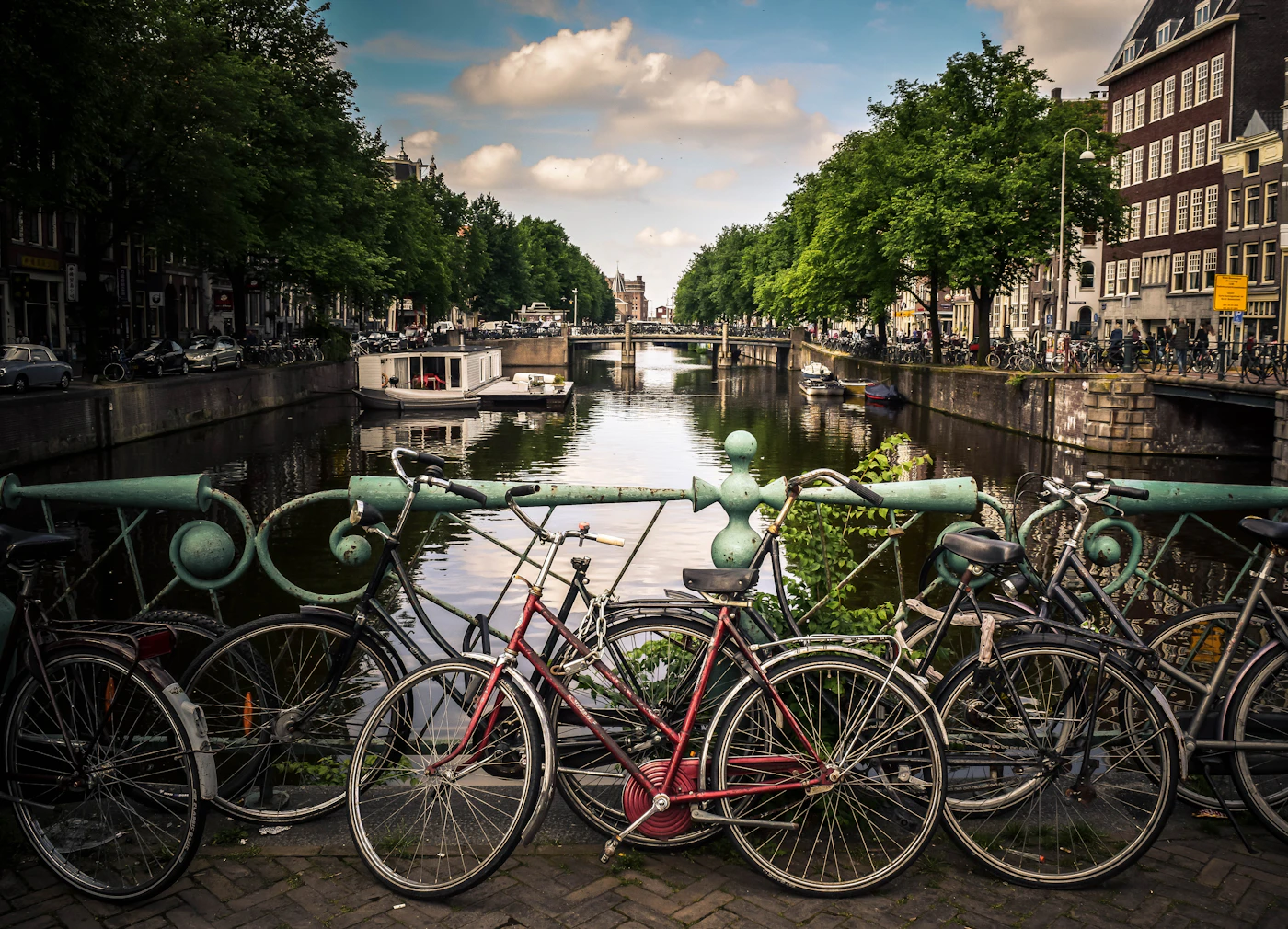
Stop 1: Centraal Station, the Singel and Torensluis
Walk out the front of Centraal Station. Cold wind comes off the IJ, the big water behind the station. Seagulls scream. Trams clang. Hundreds of bikes sit in racks.
Head west, past the domes of the St Nicholas Church across the water. Cross toward the start of the Singel, near where it meets the Brouwersgracht. This takes about 5 minutes.
What to see on the Singel
The Singel is the oldest canal on this route. It was the city's moat until the late 1500s. That's why it curves so gently. It was built to protect the town, not to look pretty.
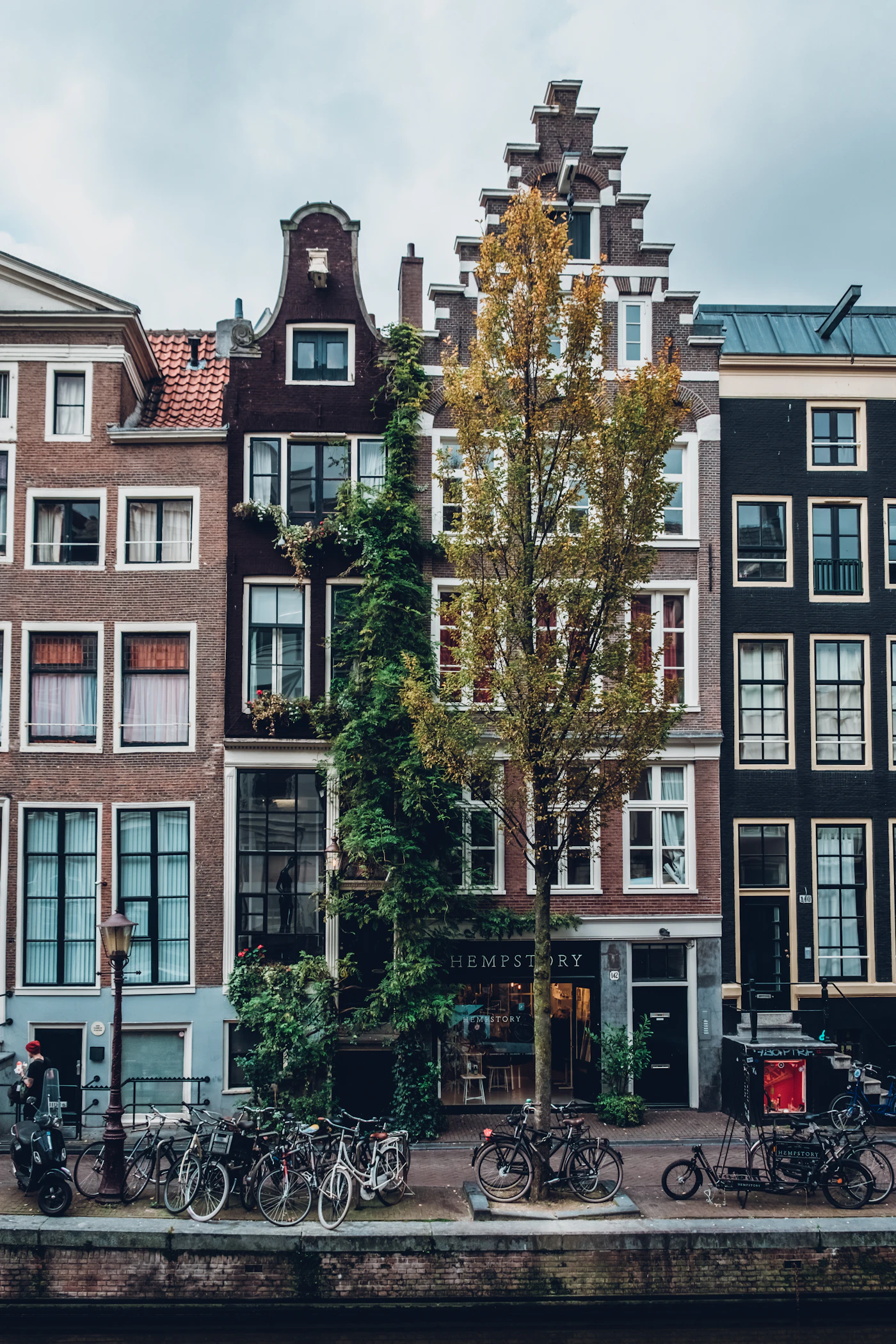
Keep your eyes open for Singel 7. It's often called the narrowest house in Amsterdam. Here's the local secret: it's really the back of a wider house. Still, it's a fun photo, and it shows a real truth. Houses here were taxed partly on how wide their front was. So people built tall and thin.
Now walk south along the Singel. Look for houseboats. Many have plants on the roof and cats in the window.
Torensluis bridge
After about 10 minutes, you reach Torensluis. It's one of the oldest and widest bridges in the city. It's so wide that cafés put tables on it in summer. There's a statue of the writer Multatuli here. Locals sit on the bridge with a beer and watch the boats.
Starting at Dam Square? This is where you join. From the Dam, walk around the back of the Royal Palace and head west. You'll hit the Singel at Torensluis in about 5 minutes.
Down the Singel to the Flower Market
Keep going south along the Singel for about 15 minutes. You'll pass old warehouses, small bridges, and the edge of the Spui, a little square with bookshops.
At the end, near the Muntplein and its old tower, you reach the Bloemenmarkt, the floating flower market. Honest talk: it's touristy. Many stalls sell bulbs and souvenirs. It's still fun for five minutes. Just check if bulbs are allowed through customs at home before you buy. Rules for bringing plants into the US and UK can be strict.
Stop 2: the Golden Bend on the Herengracht
From the Flower Market, walk about 5 minutes to where the Herengracht meets the Vijzelstraat. Now you're on the most famous stretch of the whole ring.
This is the Golden Bend, or Gouden Bocht in Dutch. It runs along the Herengracht from about the Vijzelstraat to the Leidsestraat. It takes about 6 minutes to walk.
Why it's called golden
The richest people in the city built here. The plots were double-wide. The houses are big, pale and grand, made of stone instead of brick. Many have fancy steps up to the front door. Behind them, there are often huge gardens you can't see from the street.
Just east of the Vijzelstraat, at Herengracht 502, is the official home of the mayor of Amsterdam. It's a fine old house with columns.
Optional detour: the bridges of the Reguliersgracht
If you have 10 extra minutes, walk a little east along the Herengracht. Stop where it crosses the Reguliersgracht. Look down the Reguliersgracht. On a clear day you can see a long line of bridges stacked one after another. At night, with the bridge lights on, it's magic.
Look up at the gables
Before you move on, stop and look up. The tops of canal houses are called gables. They come in shapes with names: step gables, neck gables, bell gables, and simple spout gables on old warehouses.
See that hook sticking out at the very top? That's a hoisting beam. The stairs inside these houses are steep and tiny. So people pulled furniture up with a rope and hook, then swung it in through the window. Movers still do it today. Many houses also lean forward a little, on purpose, so the load doesn't bang the front.
Want to read gables like a pro? Our guide to Amsterdam canal house gables shows every type.
Stop 3: from the Herengracht to the Keizersgracht
From the Leidsestraat, keep walking north along the Herengracht for about 5 minutes. You'll reach the Leidsegracht, a short side canal.
Near here, at Herengracht 386, is Het Grachtenhuis, a small museum about the canal ring. If you like models, maps and how-it-was-built stories, it's a good stop. Check opening times before you go.
Turn left on the Leidsegracht. In a minute or two you reach the Keizersgracht, the Emperor's Canal. It's the widest of the three main canals. Turn right and walk north.
What makes the Keizersgracht different
The Keizersgracht feels a little calmer than the Herengracht. The houses mix grand homes with old merchant buildings. You'll hear the clink of bike bells and the slap of water on the quay. In autumn, the elm trees drop yellow leaves into the canal. Walk about 7 minutes to the Huidenstraat.
Stop 4: the Nine Streets
Now for the fun part. The Nine Streets, or Negen Straatjes, are nine short streets that cross between the main canals. Straatjes means "little streets." They're packed with small shops, vintage stores, cheese shops and cozy cafés.
The streets run in pairs across the canals:
- Huidenstraat and Runstraat
- Berenstraat and Wolvenstraat
- Reestraat and Hartenstraat
- Wijde Heisteeg, Gasthuismolensteeg and Oude Spiegelstraat, between the Singel and the Herengracht
The easiest plan: zigzag. Walk one street west, cross a canal, turn, and walk the next one back. It's about 1 km and 15 minutes without stopping. With shopping, give it an hour.
This is a great place for a coffee and a slice of cake. Or grab a warm stroopwafel, two thin waffles with syrup in the middle. For shop picks, see our Nine Streets shopping guide.
Finish at the west end of the Reestraat. That puts you right on the Prinsengracht.
Stop 5: the Prinsengracht and the Westerkerk
The Prinsengracht is the outer canal of the main ring. It's the longest, and it feels the most lived-in. There are more houseboats, more bikes, more neighbors chatting on their front steps.
Turn right and walk north for about 6 minutes. You'll see the tall tower of the Westerkerk, the West Church. It's the tallest church tower in the old city. The painter Rembrandt is buried here, in a grave nobody can find. It's unmarked.
Anne Frank House and the Homomonument
Right next to the church, at Prinsengracht 263, is the Anne Frank House. This is where Anne Frank hid during World War II. It's one of the most moving places in Europe. Book tickets online, well ahead. Tickets often sell out, and you can't just walk in.
On the Keizersgracht side of the church, look for the Homomonument. It's a memorial made of three pink granite triangles. It honours gay and lesbian people who were persecuted. Locals leave flowers here.
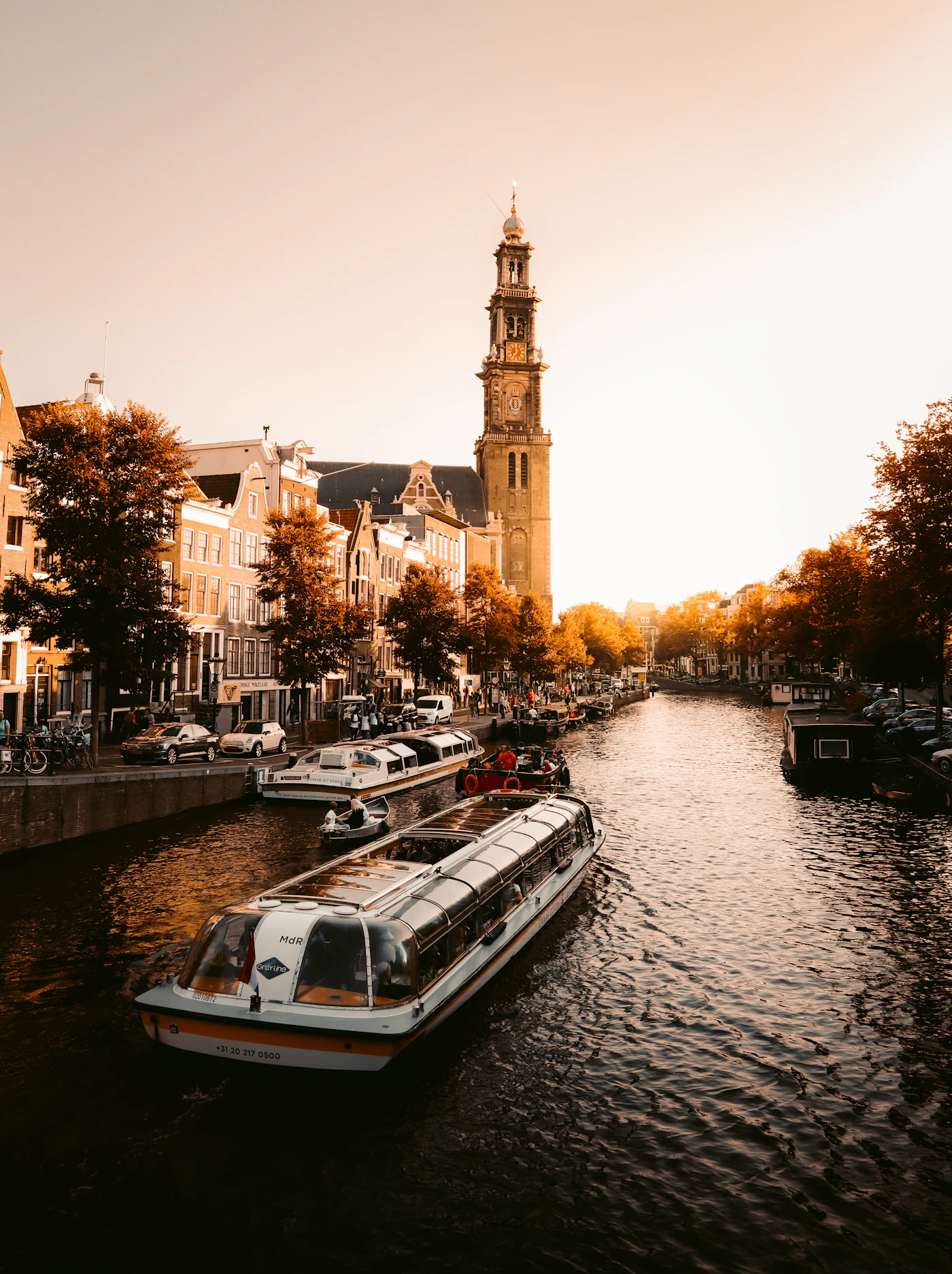
Stop 6: finish in the Jordaan
Cross the Prinsengracht at the Westerkerk and walk into the Jordaan. This was the working-class district built next to the rich canal ring. While merchants lived in mansions on the Herengracht, the workers who built the city lived here, in small homes on narrow streets.
Today it's one of the most loved neighborhoods in Amsterdam. Walk up the Bloemgracht and the Egelantiersgracht, two pretty little canals. Look for hofjes. A hofje is a hidden courtyard with small homes around a garden. Many are behind plain doors. If one is open, go in quietly. People live there.
End at the Noordermarkt, about 12 minutes from the Westerkerk. On Saturdays there's a farmers market here. On Mondays there's a flea market. Nearby on the Lindengracht there's a big Saturday market too.
Your reward
You've earned it. Right by the Noordermarkt is Winkel 43, famous for its appeltaart, meaning apple pie. It's tall, warm and topped with a cloud of whipped cream. Or find a bruin café, a "brown café." It's an old Dutch pub with dark wood, low light and locals who've been on the same stool for 30 years.
For more about this area, read our local's guide to the Jordaan.
Want a guide instead? Walking the canals with Oranje Umbrella
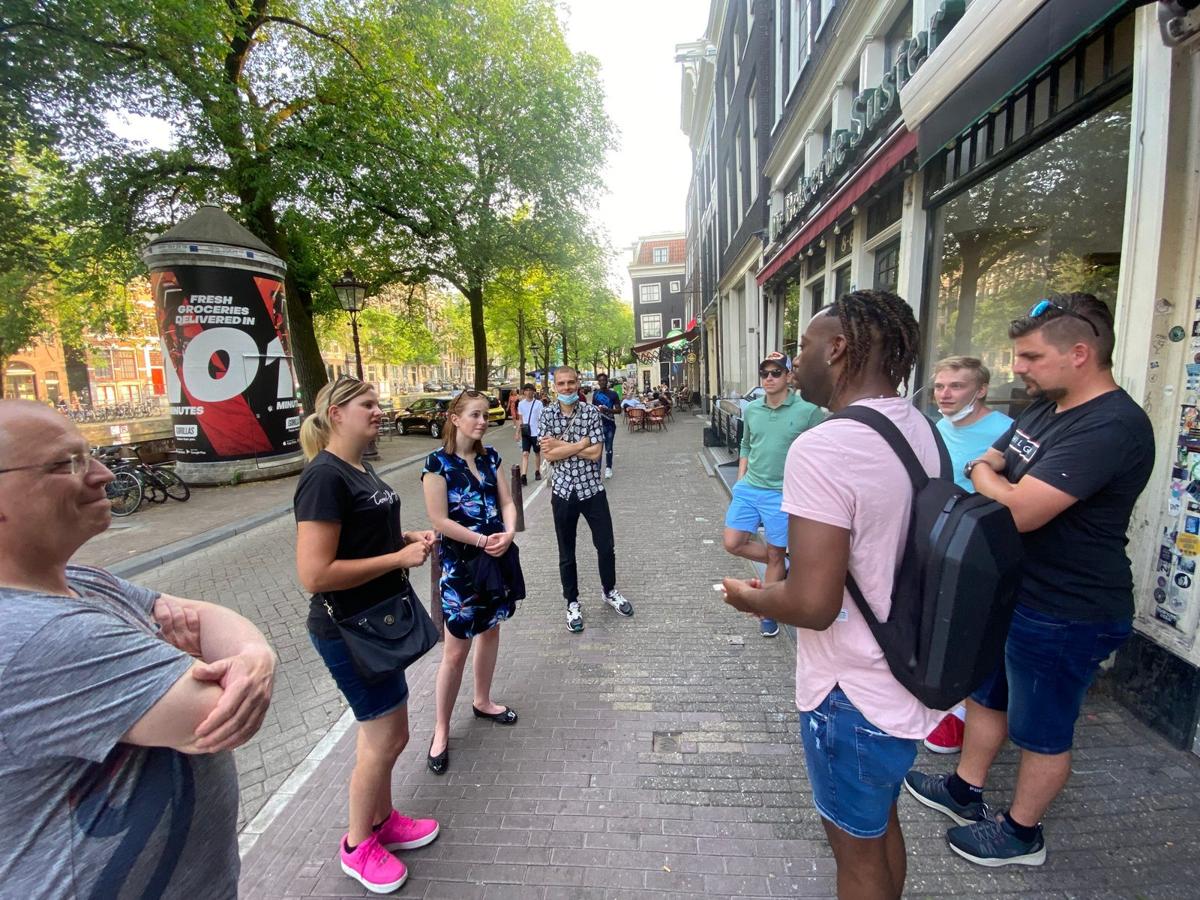
A self-guided walk is great. But a good guide turns "nice old houses" into stories you'll tell for years. Who lived here. Who went broke. Which house hid a secret church.
Our Golden Age City Center walking tour meets at Dam Square. It covers the canals, the Nine Streets and the hidden Begijnhof courtyard. We've been guiding since 2012. We have over 4,000 verified reviews across GetYourGuide, Tripadvisor and Google. Our tours were featured on Netflix.
Any of our tours can be private — just your group, your date, your pace. Private tours start at €295 excl. VAT for the whole group. You can book a private tour for your family, your friends, or just the two of you. If you want everything handled, our private concierge day includes hotel pickup and reservations.
Before you go, read the history of the Amsterdam canal ring once more. Then walk this route. You'll see the city with new eyes. The bends, the bridges, the leaning houses, all of it will make sense.
Mistakes to avoid on a canal ring walk
We see these all the time.
- Standing in the bike lane for photos. Step to the side. Bikes won't stop.
- Sitting on the edge of the quay at night after drinks. There are no railings. People fall in every year.
- Only walking the Damrak. The Damrak is loud and full of tourist traps. The real canals start a few minutes west.
- Skipping the side streets. The Nine Streets and the little bridges are the best part.
- Not booking the Anne Frank House. Tickets go fast. Plan ahead.
- Leaving wheeled luggage on the walk. Cobblestones eat suitcase wheels.
Quick answers
How long does the Amsterdam canal ring walk take?
This route is about 6 km, or 3.7 miles. It's around 1.5 to 2 hours of walking. With stops for coffee, shops and photos, plan on 3 to 4 hours.
Where should I start a grachtengordel walking route?
Start at Centraal Station for the full walk along the Singel. Or start at Dam Square and join at Torensluis bridge to save time. Both work well.
What is the difference between the Herengracht, Keizersgracht and Prinsengracht?
The Herengracht is the grandest, with the Golden Bend and the richest houses. The Keizersgracht is the widest. The Prinsengracht is the outer canal, with more houseboats and a lived-in feel.
Is the Amsterdam canal ring free to walk?
Yes. The streets and quays are public and free. You only pay for museums, food and drinks along the way.
When is the best time to walk the canals?
Early morning is quiet and calm. Golden hour before sunset is the prettiest. Spring and autumn are great, and the canals at night, with bridge lights on, are lovely too.
Book your Amsterdam canal walking tour with Oranje Umbrella
Walk it yourself, and you'll love it. Walk it with us, and you'll know why it looks the way it does. Join one of our Amsterdam walking tours from €27 per person.
Book now on FareHarbor →
Want it to be just your group? Book a private tour — your date, your time, your pace, from €295 excl. VAT for the whole group. Learn more about Oranje Umbrella on our homepage.
Questions? Email Erik@oranjeumbrella.com or message us on Instagram at @oranjeumbrella.