
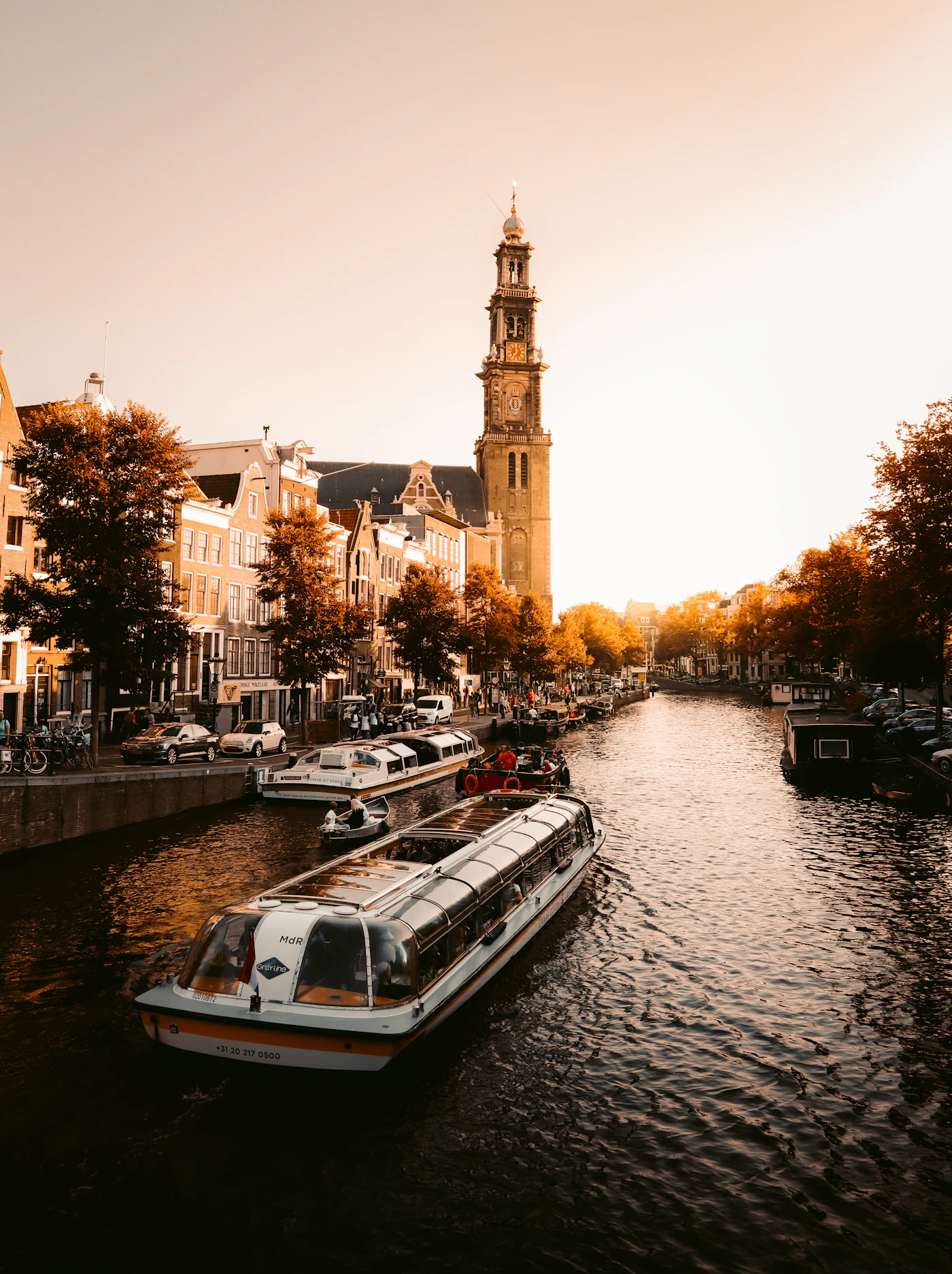
The Jordaan in Amsterdam is the part of town where we send our friends. Not the stag party. Not the guy who wants a selfie with a giant cheese wheel. Our real friends. The ones who want to sit in a smoky old bar, eat warm apple pie, and watch an old man in a flat cap feed his dog half a sausage.
The Jordaan (say it like "yor-DAHN") sits just west of the canal ring. It used to be the poor side of town. Workers lived here. So did immigrants, brewers, dyers and people who made sails and rope. Today it is one of the most loved neighborhoods in Europe. It is also one of the most expensive. But it still feels like a village if you know where to look.
We have walked these streets since 2012. Our founder Erik moved here from Philadelphia, and the Jordaan was where Amsterdam first felt like home to him. This guide covers the best things to do in the Jordaan, the Jordaan markets, where to drink, what to eat, and the mistakes we see tourists make every single week.
Where is the Jordaan, and how do you get there?
The Jordaan is a box of narrow streets and small canals. On one side is the Prinsengracht, the outer canal of the famous ring. On the other side is the Lijnbaansgracht. In the north it runs up to the Brouwersgracht. In the south it ends near the Leidsegracht.
It is small. You can walk from top to bottom in about 20 minutes. Back in the US, that is about the size of a few city blocks in a downtown. Back in the UK, think of it like a corner of central London you can stroll in an afternoon.
Getting there from Centraal Station
From Centraal Station, it is a 15-minute walk. Head west along the water and cross the Singel. Or take tram 13 or 17 toward the Westerkerk. You can tap in with your contactless bank card. Tap out when you get off.
Honestly, though? Walk. The Jordaan is a place for feet, not wheels.
Why is it called the Jordaan?
Nobody knows for sure. That is part of the fun. One story says the name comes from the French word jardin, which means garden. Many streets here are named after plants and flowers. There is Rozengracht (rose canal), Bloemgracht (flower canal), Lindengracht (linden tree canal) and Egelantiersgracht (wild rose canal).
Another story says it comes from the River Jordan in the Bible. Either way, locals don't lose sleep over it. They are too busy drinking beer on a bench.
A working-class past
In the 1600s, the city built the grand canal ring for rich merchants. You can read the full story in our Amsterdam canal ring history. The workers who built those mansions needed somewhere to live. That place was the Jordaan.
The streets were narrow. Houses were packed tight. Families of eight lived in two rooms. Factories, breweries and workshops sat right next to homes. Many canals were filled in later because they stank. The Rozengracht, for example, used to be water. Now it is a busy street.
For hundreds of years, the Jordaan was rough and proud. People here had their own accent, their own songs and their own sense of humor. That spirit is still around. You can hear it in the old Dutch folk songs that some brown cafés still play on Sunday afternoons.
What are the best things to do in the Jordaan?
Here is our short list. These are the things we actually do when we have a free afternoon here.
- Climb the Westerkerk tower. The Westerkerk (West Church) has the tallest church tower in the old city. The painter Rembrandt is buried inside, in a grave with no marker. Nobody knows exactly where he lies.
- Visit the Anne Frank House. It is at Prinsengracht 263, right on the edge of the Jordaan. Book tickets online weeks ahead. They do not sell tickets at the door in the normal way, and they sell out fast.
- Shop the Saturday markets. The Noordermarkt and the Lindengracht market are both on Saturday. More on these below.
- Find a hidden hofje. A hofje is a small courtyard with tiny houses around a garden. They are quiet and lovely. More on these below too.
- Sit in a brown café. A bruin café (brown café) is an old Dutch pub. The walls are brown from hundreds of years of smoke and beer.
- Eat apple pie at Winkel 43. It sits on the corner by the Noordermarkt. It is famous for good reason.
- Walk the Brouwersgracht. Many people call it the prettiest canal in Amsterdam. Old warehouses, houseboats and bikes everywhere.
- Browse the Nine Streets. The Negen Straatjes sit just across the Prinsengracht. Read our Nine Streets shopping guide for the details.
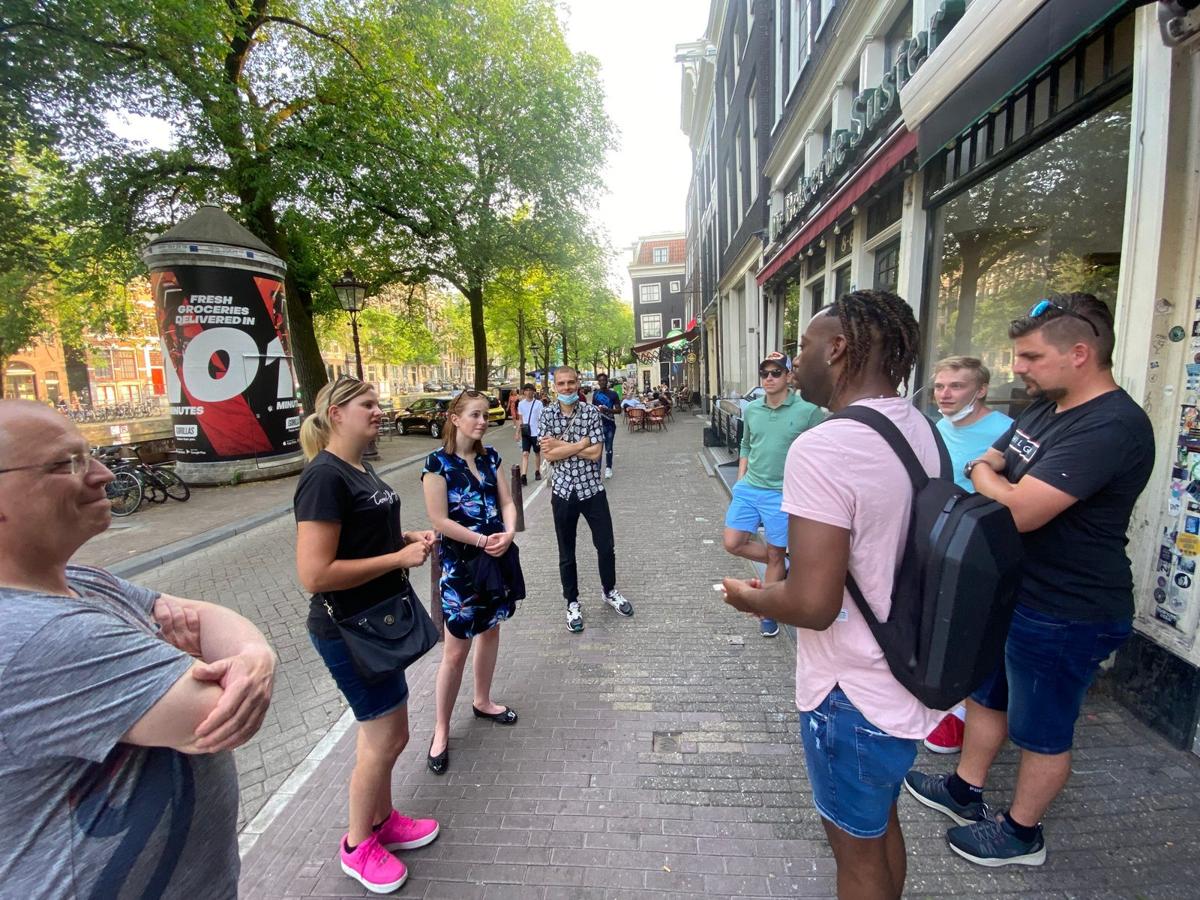
Which Jordaan markets should you visit?
The Jordaan markets are the heartbeat of the neighborhood. If you are in town on a Saturday or a Monday, plan your morning around them.
Noordermarkt on Saturday
The Noordermarkt is the square around the Noorderkerk (North Church). On Saturday mornings it fills with a farmers market. Think organic bread, big wheels of Dutch cheese, fresh mushrooms, flowers, eggs and hot coffee. It smells like warm bread and wet cobblestones.
Go early. By late morning it gets crowded. Bring a card, but carry a few coins too. Most stalls take cards now, but not every single one.
Noordermarkt on Monday
On Monday mornings, the same square becomes a flea market. You will find old clothes, vinyl records, odd old tools, vintage glasses and boxes of things nobody can explain. It is a treasure hunt. Haggling a little is fine. Haggling hard is rude.
Lindengracht market on Saturday
The Lindengracht market is a long street market, also on Saturday. It is more of a local, everyday market. People buy fish, fruit, socks, phone cases and cheese. It is less fancy than the Noordermarkt. We like it for exactly that reason.
Look for a fish stall and order kibbeling. That means chunks of white fish, fried hot, with garlic sauce. Eat it standing up. That is the rule.
What is a brown café, and where do you find one?
A brown café is the soul of the Jordaan. Bruin café means "brown café." They are small, old pubs with dark wood, low light and nicotine-stained ceilings from the days before the 2008 indoor smoking ban. There is often a cat. There is always a regular at the end of the bar who has been there since noon.
Here is how to act like you belong:
- Order a small beer. Ask for "een biertje" (a little beer). It comes in a small glass with a big foam head. That is normal. Do not complain about the foam.
- Try a jenever. That is Dutch gin. It is older than the British kind. It is often served in a tiny tulip glass filled to the brim. Locals bend down and sip the first bit without lifting the glass.
- Don't expect table service everywhere. In many brown cafés, you order at the bar.
- Tipping is small. In the US, you tip 20 percent. Here, rounding up or leaving 5 to 10 percent is plenty for good service.
Some well-known brown cafés sit around the Noordermarkt, the Westerstraat and along the Prinsengracht. Walk in, look around, and if it smells like old wood and beer, you are in the right place.

What are the hidden hofjes of the Jordaan?
A hofje is a little courtyard almshouse. Rich people built them long ago for poor older women, widows and the elderly. They built them partly out of kindness and partly to make sure they got into heaven. Honest people, those Dutch merchants.
The Jordaan has many of them. They hide behind plain doors on ordinary streets. You walk through a dark hallway and suddenly you are in a garden. Birds sing. Roses climb the walls. The city noise just stops.
How to visit a hofje politely
People still live in these homes. Many are elderly. Some hofjes are open to the public at certain hours. Others are closed. Here is the deal:
- If the door is open, you can usually step in quietly.
- Do not shout, play music or bring a big group.
- Do not peek through windows. Those are people's living rooms.
- Never smoke anything inside a hofje.
If you want to see Amsterdam's most famous courtyard, the Begijnhof, it is in the center, not the Jordaan. Our Begijnhof history guide tells its story. It is also a stop on our Golden Age City Center walking tour.
What should you eat in the Jordaan?
The Jordaan is a great place to eat. It is full of small bakeries, cheese shops, cafés and wine bars.
Apple pie at Winkel 43
Winkel 43 is famous for its appeltaart, Dutch apple pie. It is tall, deep and full of apples and cinnamon. Ask for it "met slagroom." That means with whipped cream. Do it. You are on vacation.
On Saturday, the line can be long because of the market next door. Go on a weekday afternoon if you can.

Cheese, but not the tourist kind
You will see "cheese museums" with free samples all over the center. They are fun, but they are mostly shops for tourists. In the Jordaan, look for small cheese shops where locals buy. Ask for oude kaas. That means old cheese. It is aged, crumbly and salty, and it tastes a bit like caramel.
Bitterballen with your beer
Bitterballen are small fried balls of meat gravy. They come with mustard. They are lava-hot inside. Wait a minute before you bite. Every tourist burns their mouth on the first one. Every single one.
For a full guide to Dutch snacks, read our sibling article on what to eat in Amsterdam.
Is there a coffeeshop scene in the Jordaan?
Yes, a small one. The Jordaan has a few long-running coffeeshops tucked into side streets. They feel more local and relaxed than the busy shops near Dam Square. One well-known name, Grey Area, sits just across the edge of the neighborhood near the Nine Streets.
A quick reminder: a "coffeeshop" sells cannabis. A "café" sells coffee. If you want a latte, do not walk into a coffeeshop and ask for one. Well, you can. They might even make it. But you will get funny looks.
Cannabis is not legal in the Netherlands. It is tolerated under strict rules. Do not smoke on the street, in a hofje, or anywhere near the Anne Frank House. Smoke inside a coffeeshop that allows it. Our guide to smoking weed on Amsterdam streets explains where you can and can't.
If you are curious, our Cannabis Culture and Coffeeshop Etiquette tour is the friendliest way in. It is strictly 18+, with photo ID checked. We visit two or three licensed coffeeshops and teach you how it all works. We don't sell or supply cannabis, and nobody has to consume. We also show you how to spot a good one on your own.
What mistakes should you avoid in the Jordaan?
We love the Jordaan. That is why we get a little protective. Here are the big mistakes.
Walking in the bike lane
The red paths are bike lanes. Bikes come fast and quiet. A Dutch cyclist will ring once. Then they will not stop. Stay on the sidewalk. Look both ways twice.
Sitting on someone's front steps
Many Jordaan homes have little benches or plants by the door. Those belong to the people who live there. Don't sit on them for your lunch break. Locals have had enough.
Being loud at night
People live here. Kids sleep here. Nurses sleep here before night shifts. The Jordaan is not the Red Light District. If you want to party, head to the center after dark.
Rushing it
The biggest mistake is "doing" the Jordaan in 30 minutes. You can't. The best things here happen slowly. A second coffee. A wrong turn that leads to a garden. A chat with a cheese seller. Give it at least half a day.
What is a good half-day route through the Jordaan?
Here is a simple walking route. It takes about four hours with stops.
- Start at the Westerkerk (around 10 am). Look up at the tower. Then walk past the Anne Frank House if you have tickets.
- Walk up the Prinsengracht to the Egelantiersgracht. Turn left and wander. This small canal is very pretty.
- Zigzag north through the side streets, called dwarsstraten (cross streets). This is where the small shops and bakeries hide.
- Reach the Noordermarkt (around noon). On Saturday, shop the market. Then get apple pie at Winkel 43.
- Stroll the Lindengracht for a fish snack.
- End on the Brouwersgracht for photos. Then find a brown café for a biertje.
If you want the bigger picture, our sibling article on the Amsterdam canal ring walking route connects the Jordaan to the grand canals next door.
Why see the Jordaan with a private guide?
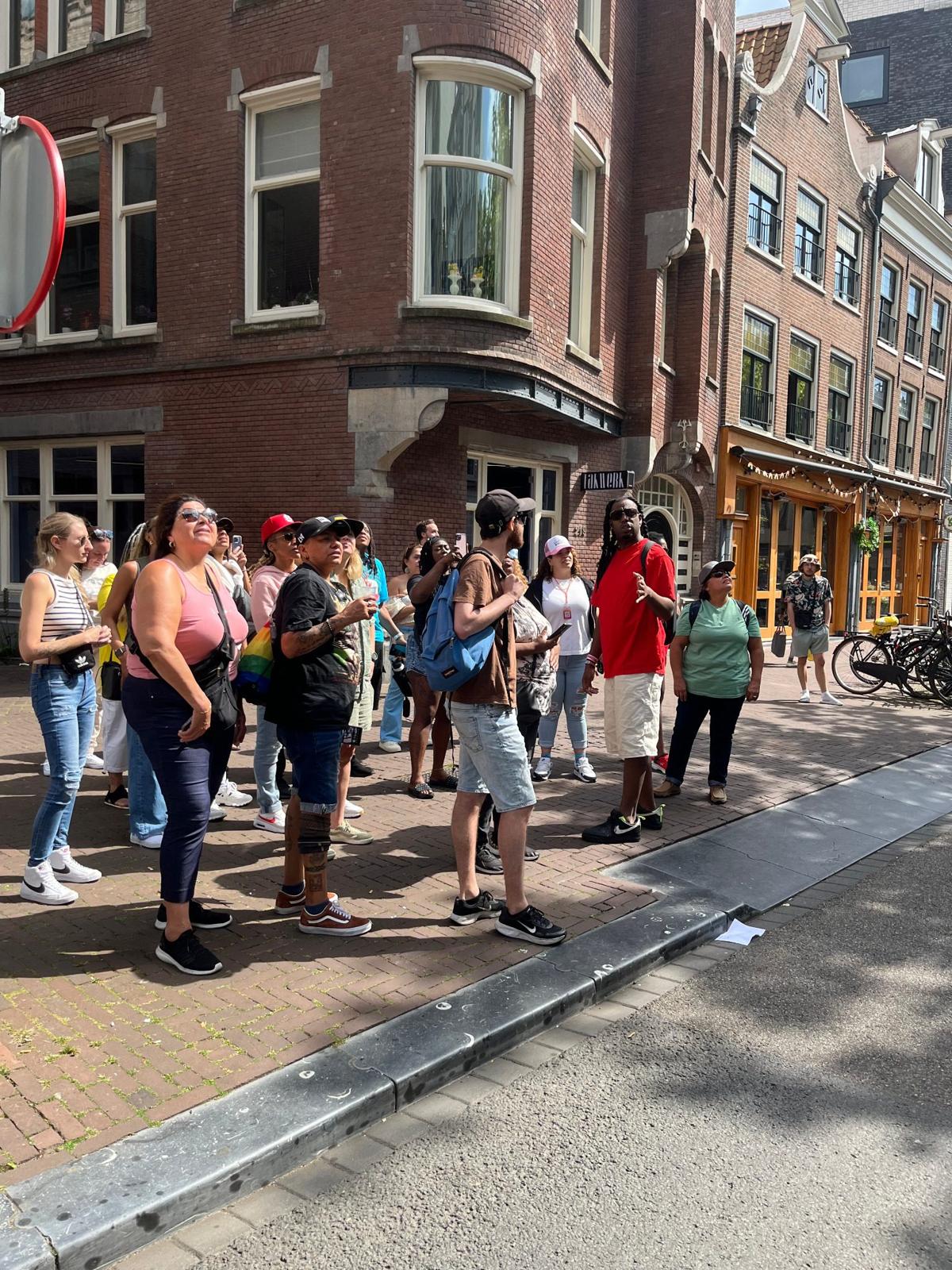
You can walk the Jordaan on your own. Lots of people do. But a guide opens doors. Literally. We know which hofjes welcome visitors and when. We know the stories behind the gables, the old songs, and the strange street names. We know which brown café has the best bitterballen this year.
Any of our tours can be private — just your group, your date, your pace. Private tours start at €295 excl. VAT for the whole group. That includes the Jordaan, the canals, the markets, and yes, a stop for pie.
We have over 4,000 verified reviews on GetYourGuide, Tripadvisor and Google. Our tours have been on Netflix. We guide in English, Spanish, German and Dutch. And we really, really like this neighborhood.
Quick answers
Is the Jordaan worth visiting?
Yes. It is one of the best neighborhoods in Amsterdam for walking, eating and drinking. It feels calmer and more local than the center. Give it at least half a day.
What day are the Jordaan markets?
The Noordermarkt has a farmers market on Saturday morning and a flea market on Monday morning. The Lindengracht market is also on Saturday. Go early to beat the crowds.
Is the Jordaan safe at night?
Yes, it is a very safe area. It is a quiet, residential neighborhood. Just keep your voice down and watch for bikes in the dark.
How far is the Jordaan from Centraal Station?
It is about a 15-minute walk west of Centraal Station. You can also take tram 13 or 17 to the Westerkerk stop. Paying with a contactless card is easy.
Is the Anne Frank House in the Jordaan?
It sits at Prinsengracht 263, right on the eastern edge of the Jordaan. Book your tickets online well ahead. They sell out, often weeks in advance.
Book your Jordaan walking tour with Oranje Umbrella
The Jordaan rewards slow feet and curious people. Let us show you the hidden courtyards, the best pie, the oldest bars and the stories that don't make it into guidebooks. Join one of our Amsterdam walking tours or ask our concierge desk to plan a full private concierge day in Amsterdam with hotel pickup and dinner reservations.
Want the Jordaan just for your group? Book a private tour with Oranje Umbrella on any date and time you choose.
Questions? Email Erik@oranjeumbrella.com or message us on Instagram @oranjeumbrella.